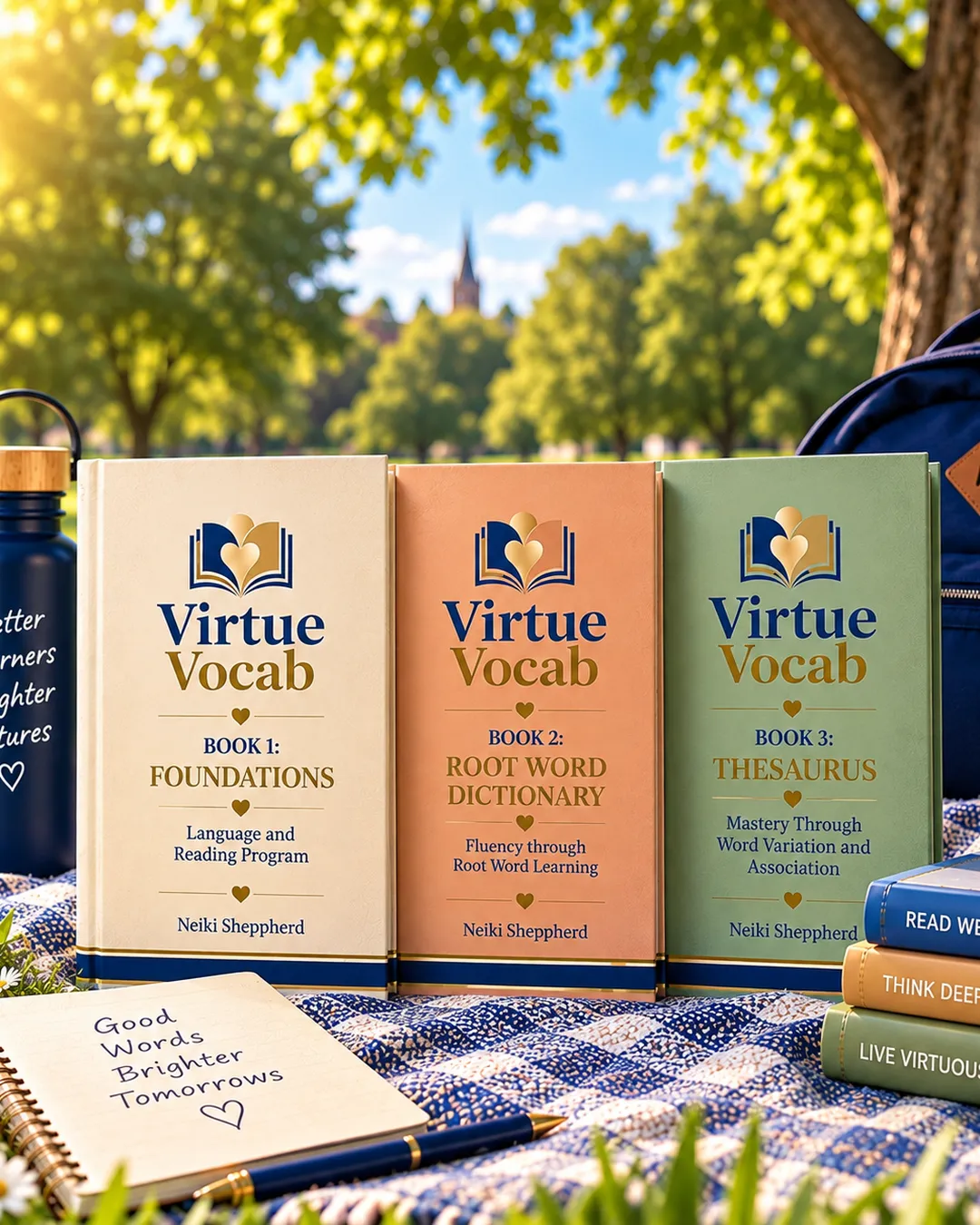
We Hear Before
We Read.
VIRTUE VOCAB™
The natural pathway from spoken sounds to confident literacy and honorable character. Start building your family’s educational foundation the way our brains actually learn: through OUR CLOSEST, most vocaL relationshipS. Virtue Vocab™ gives as a language of love.
The natural pathway from spoken sounds to confident literacy and honorable character. Start building your family’s educational foundation the way our brains actually learn: through the closest, most vocal relationships starting at home, then beyond.
Virtue Vocab™ teaches a language of love.
YOU DON’T OUTGROW VIRTUE VOCAB™. YOU GROW DEEPER INTO IT.™
VIRTUE VOCAB™
NATURAL PROGRESSION
We Hear Before
We Read.
Hear. Speak. Read. Live a virtuous life.
Hear
Language begins with listening. We absorb sound, pace, speed, and rhythm of speech long before we understand meaning. Listening to our surroundings is our first passive participation in language and reading.
Say
Next we articulate what we hear, forming sounds and syllables. Speech is our first active participation in language.
See
We have to be trained to learn letter names and the sounds they make. Then, we are trained to see and hear the blends, combinations these letters can make in writing and speaking.
Children are practicing these sounds before they ever see the letters. The brain naturally associates similarities and stores them.
This is the step that can expose major gaps in many training programs. The brain processes gaps in learning as confusion.
When a learner's brain encounters a gap, the brain shifts focus from learning new material to seek clarity for the confusion.
Virtue Vocab™ fills the gap.
VIRTUE VOCAB™
BRIDGES THE SOUND-TO-PRINT GAP™
Knowing Basic
Letter Sounds
Isn't Enough.
In most reading programs, learners discover that 'a' makes the short 'ah' sound. It works for "run" and "upon".
Then, they turn the page and encounter "autumn", "any", "village", and "stone" and the rules don't cover all of the "A" sounds they hear or speak. Quickly, a student loses interest...
Virtue Vocab™ fills the gaps between what we hear, say, and what we see...
What we decide and what we discern...
It is never a lack of effort — it is a lack of the complete system.
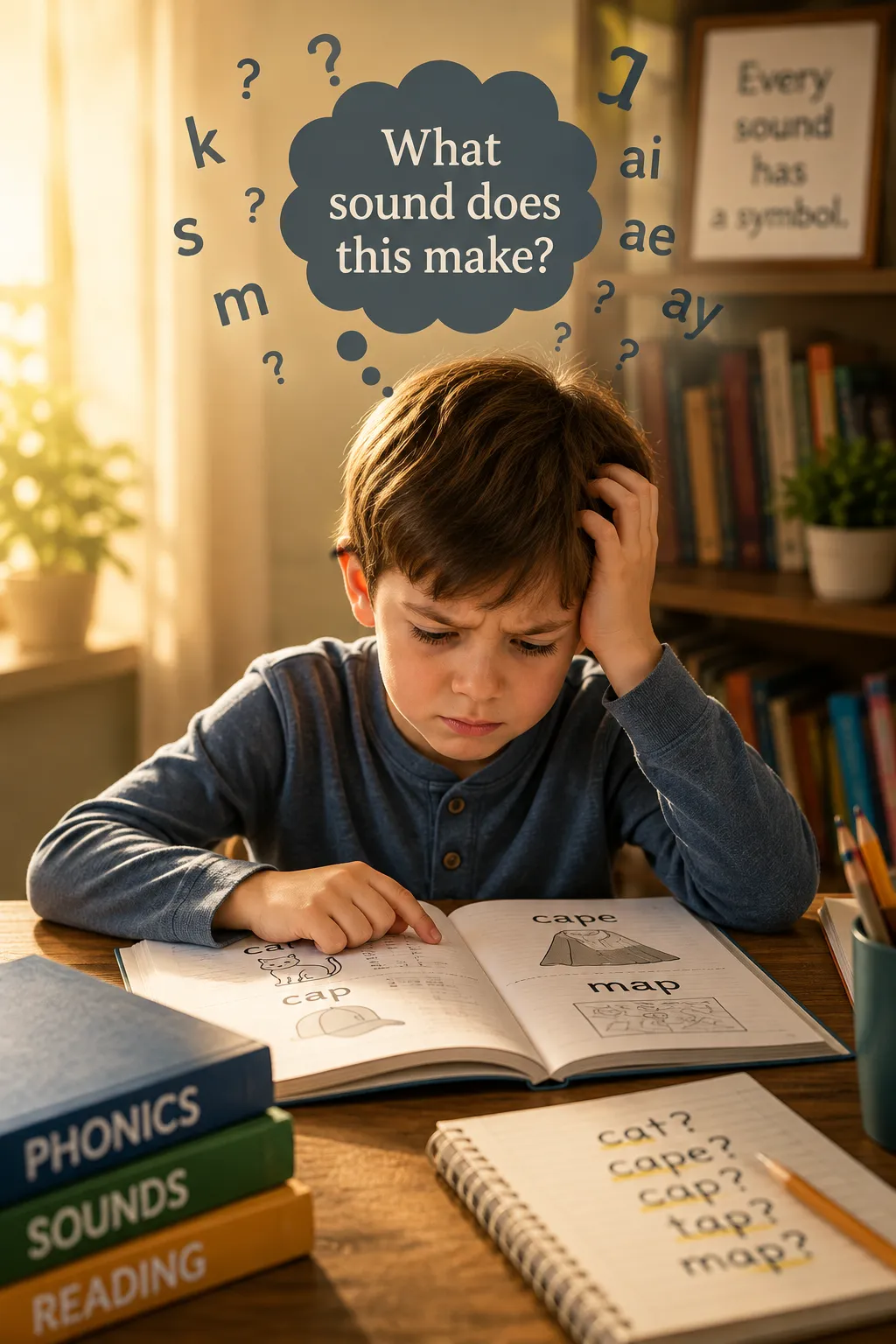
Let's take a look at how Virtue Vocab™ provides a more!
MOST READING PROGRAMS START WITH ABOUT 72 BASIC PHONICS SOUNDS.
VIRTUE VOCAB™
STARTS WITH OVER 140 BASIC PHONICS.
Most of us learn that letter "A" makes two to three sounds.
With Virtue Vocab™ You Learn
"A" Makes 6 Sounds.
Let's take a look at how Virtue Vocab™ provides a more comprehensive language foundation.
A
/a/ as in Apple
/a/ as in Acorn
The long sound, confidently saying its own name. Essential for mastering silent e rules.
/a/ as in Father
/a/ as in Water
/a/ as in About
/a/ as in Many
VIRTUE VOCAB™
THE COGNITIVE SHIFT
Designed To Reduce
Reading Fatigue™.
The slow-load, exhausting pace of guessing rather than decoding-defining from memory with an expanded root word framework.
- STOP: Halting at unknown words
- GUESS: Relying on pictures, context, looking up words in dictionary or asking what it means
- SURRENDER: Missing the sentence flow
- LOSE MEANING: Forgetting the context entirely
- FRUSTRATION: Giving up on reading
Build Toward Reading Flow with Virtue Vocab™
The smooth, confident pathway of structured phonetic and root word decoding.
- RECOGNIZE: Spotting phonetic patterns instantly
- READ: Moving smoothly through the text
- CONNECT: Naturally connecting sounds to print
- UNDERSTAND: Grasping the full story context
- KEEP GOING: Reading with confidence and ease
Virtue Vocab's™
Model of
Character Formation
Our eleven-stage pathway is carefully designed to guide learners from basic auditory recognition all the way to the development of profound personal character. We don't just teach students to read; we equip them to understand, reason, and live virtuously.
VIRTUE VOCAB™
Three Books.
3,000+ Virtues
One Connected
Way To Learn To Speak, Read, and
Live A Virtuous Life.
What is in the Virtue Vocab™ System?
A good character, language learning and reading program designed for conception to adulthood.
👶 Conception • Pre-School • Elementary School • Middle School • High School • Adulthood• Adulthood
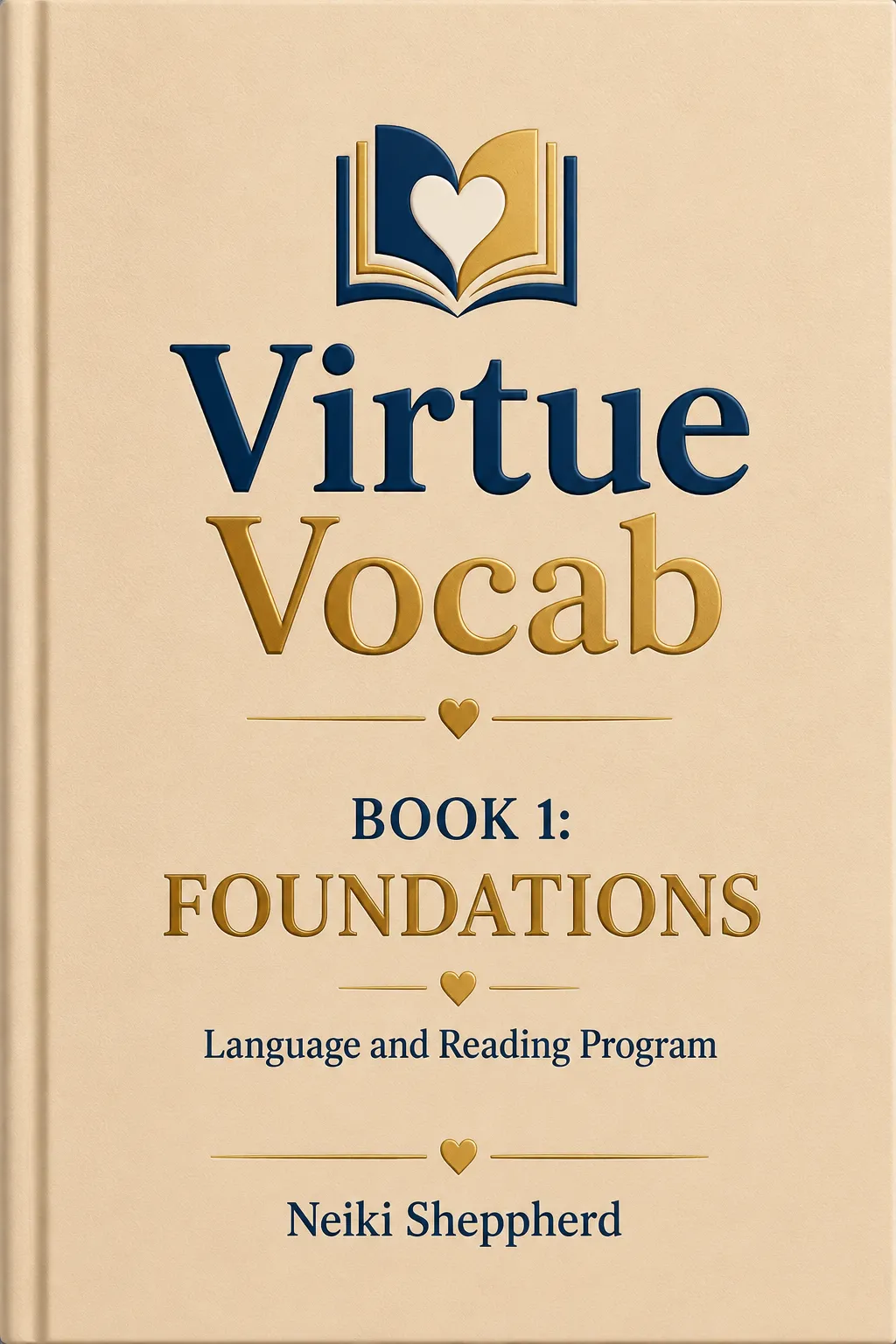
Foundations
Build a strong foundation in reading and language before you speak, and read.
HEAR • SAY • SEE • READ
Language and Reading Program for ages birth to adulthood
140+ phonics for 26 letters
1,000+ whole sound lessons
260+ spelling words
Essential Grammar for Reading
Sentence Structure Lesson
Parts of Speech
1,000 Sight Words
Express Emotions with Virtue Lesson
Expressing Emotions in Virtue
Virtue Alphabet A–Z
Transition to Book 2 Root Word Mastery
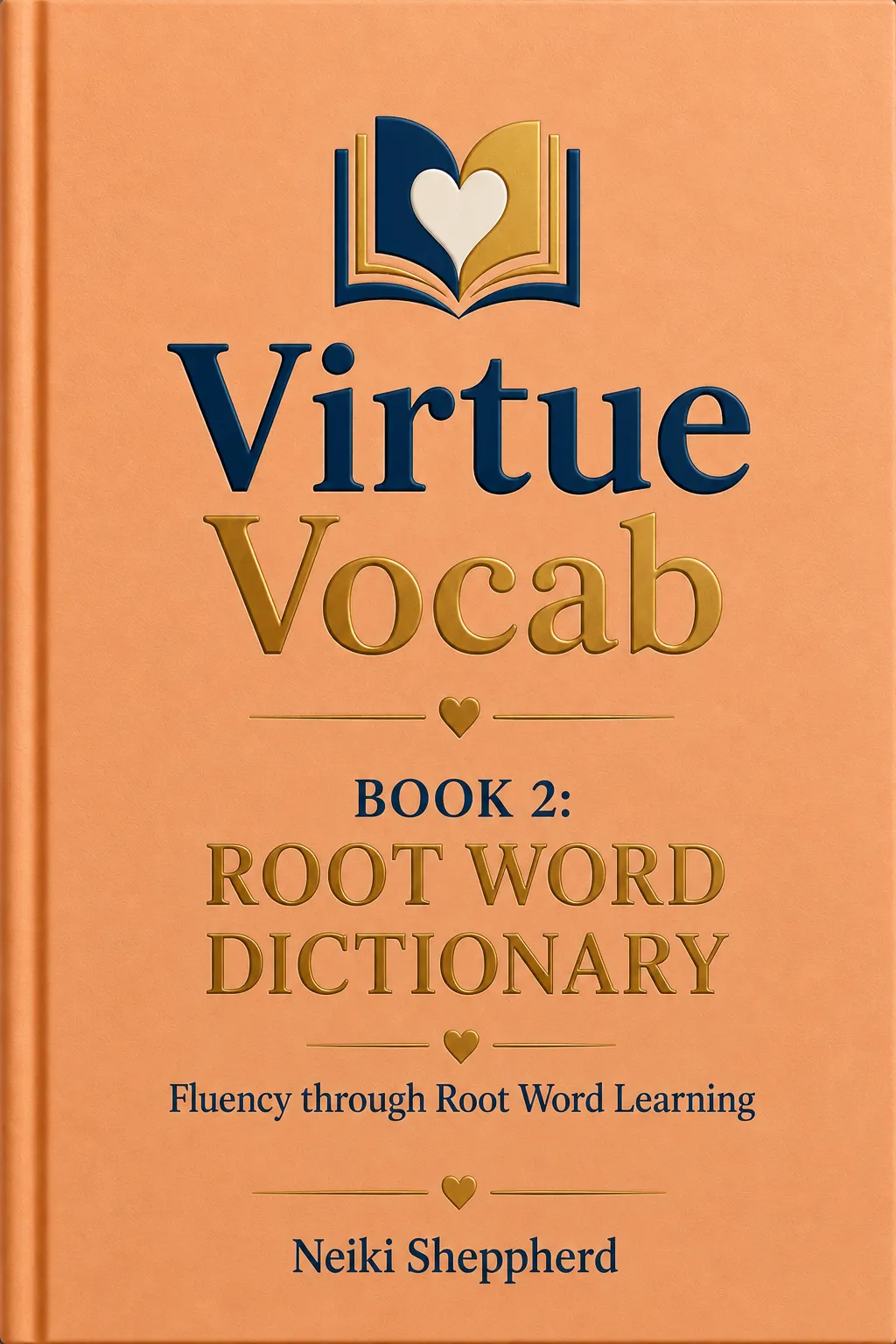
Root Word Dictionary
Learn to decode meaning faster. Unlock the deep meaning behind thousands of words through their root origins.
READ • COMPREHEND • CONNECT
- 1,700+ Root Words by association
- 30+ Root Words per 26 alphabet letters
- Prefixes and Suffixes by meaning and real world associations
- Organized by how we encounter these root words in life: experience, career, daily life...
- Greek, Latin, and Hebrew origins
- Transition to Book 3 Virtue Thesaurus
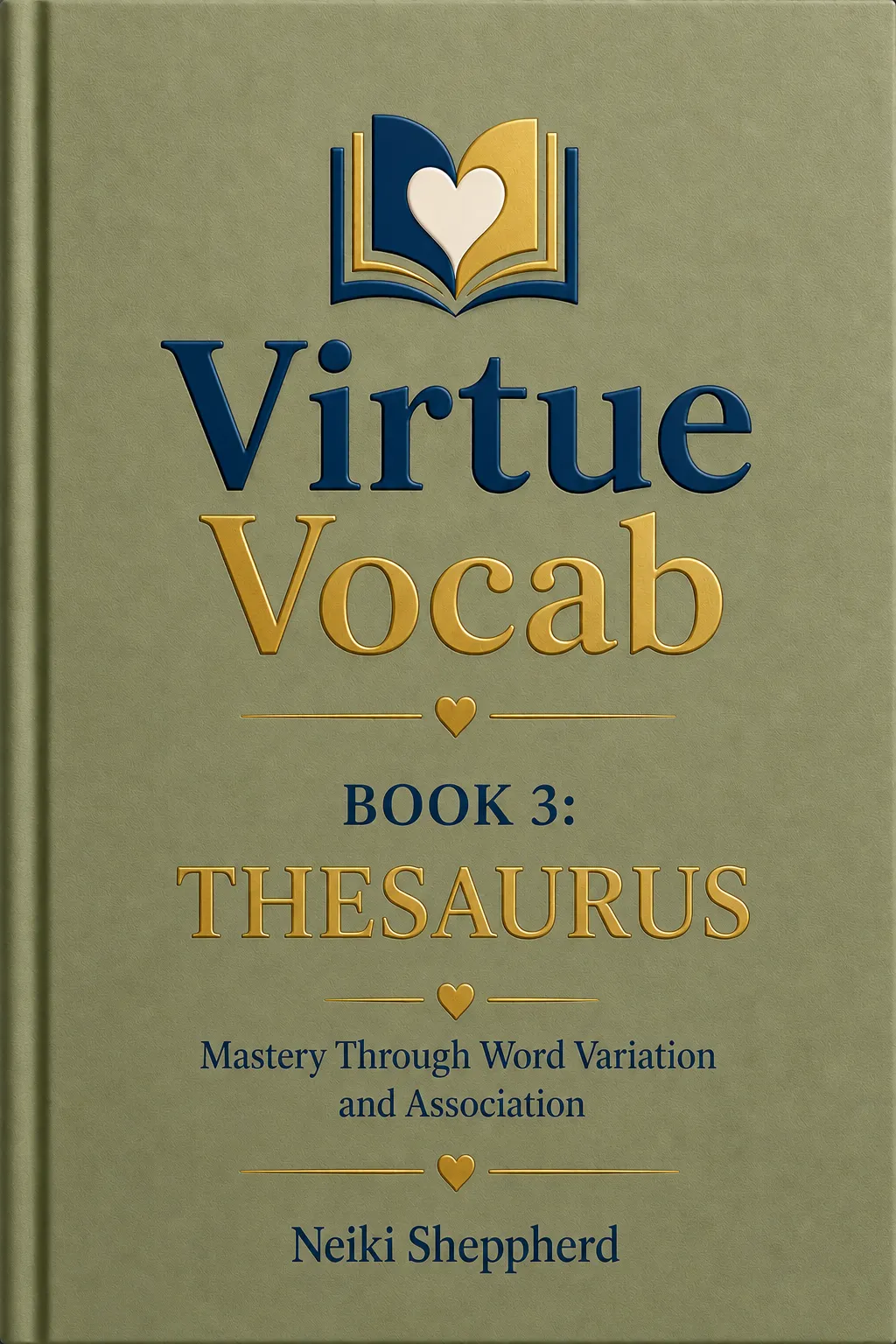
Virtue Thesaurus
Connect robust vocabulary directly to character, ethics, and moral development.
DIVERSIFY • SPEAK • LIVE
- 300+ Virtuous words, phrases
- Virtuous nouns
- Virtuous verbs
- Synonyms
- Antonyms
VIRTUE VOCAB™
You Don't Outgrow Virtue Vocab™.
You Grow Deeper Into It.™
STAGE 1
Early Childhood (Ages Conception - 6)
Read Virtue Vocab™ aloud during pregnancy.
Imprinting early phonetic sounds of virtues.
Basic moral vocabulary and simple stories.
Connecting spoken words to everyday actions.
STAGE 2
Developing Readers (Ages 7-10)
- Decoding virtue words and reading independently.
- Exploring short moral tales and classical fables.
- Identifying character motivations in reading.
STAGE 3
Independent Readers (Ages 11-14)
- Deep reading of historical figures and literature.
- Understanding character nuances and complex choices.
- Articulating moral reasoning in writing and speech.
STAGE 4
Teens & Adults (Ages 15+)
- Engaging in sophisticated ethical discussions and debates.
- Applying classical virtues to modern life challenges.
- Mentoring the next generation of readers.
Hear Virtue.
Speak Virtue.
Reading is a part of language learning. The first part of language learning is hearing. Children can hear inside their mother's womb. If they can hear before birth, choose to speak virtuous words they will recognize when they are born. May these virtues define their character.
Courage • Patience • Honesty
Responsibility • Kindness • Love
LEAD your family's culture.
Intentional Words For
Intentional Lives.
The world taught us words we never intended to teach ourselves or our children.
Virtue Vocab™ helps us intentionally choose new, honorable words.
The world is always teaching our children a vocabulary. From screens, peers, and passing conversations, they absorb words that shape their view of reality. Often, these words lack depth, virtue, and truth.
As parents, we feel this cultural tide pulling. We cannot silence the noise of the world, but we do not have to surrender our children’s minds to it. The language they hear first forms the foundation of how they will think, reason, love and live.
"we can become intentional about tEACHING CHILDREN words THAT LOVE."
- NEIKI SHEPPHERD
A SHARED JOURNEY
with VIRTUE VOCAB™

20–30% of American adults either can't read or struggle to read.
Most of us never learned the roots of our own language. We memorized the weekly spelling list, passed the grade, and moved on. We skipped the "why" and settled for the "what."
This isn't just about teaching a child to read; it's an invitation to refresh your own grasp of phonics, discover the fascinating origins of everyday words, and build character right alongside them. When you expand your capacity to understand, it removes the pressure to "fix" a struggling reader and replaces it with collaborative discovery.
“
LEAD LEARNER
There is no stronger teaching tool than a parent's healthy curiosity. When children see you engaging with the roots of language, it becomes the family culture.
Learn language in front of them.
Learn language that lasts.
BUT, MY CHILD ALREADY READS
Virtue Vocab™ Expands
The Toolbox of Virtuous Character.
Decoding sounds and pronouncing words is an incredible milestone - but it is only the beginning of true literacy. A proficient reader must constantly expand their capacity to understand, reason, and derive deep meaning from what they read. If your child is already reading, it's time to grow deeper.
- Roots & Origins: Unlocking the hidden architecture of complex words.
- Nuanced Vocabulary: Equipping them with precise language for elevated thought.
- Deep Reasoning: Moving beyond 'what happened' to 'why does it matter'.
- Expressive Fluency: Reading with the rhythm and cadence of natural speech.
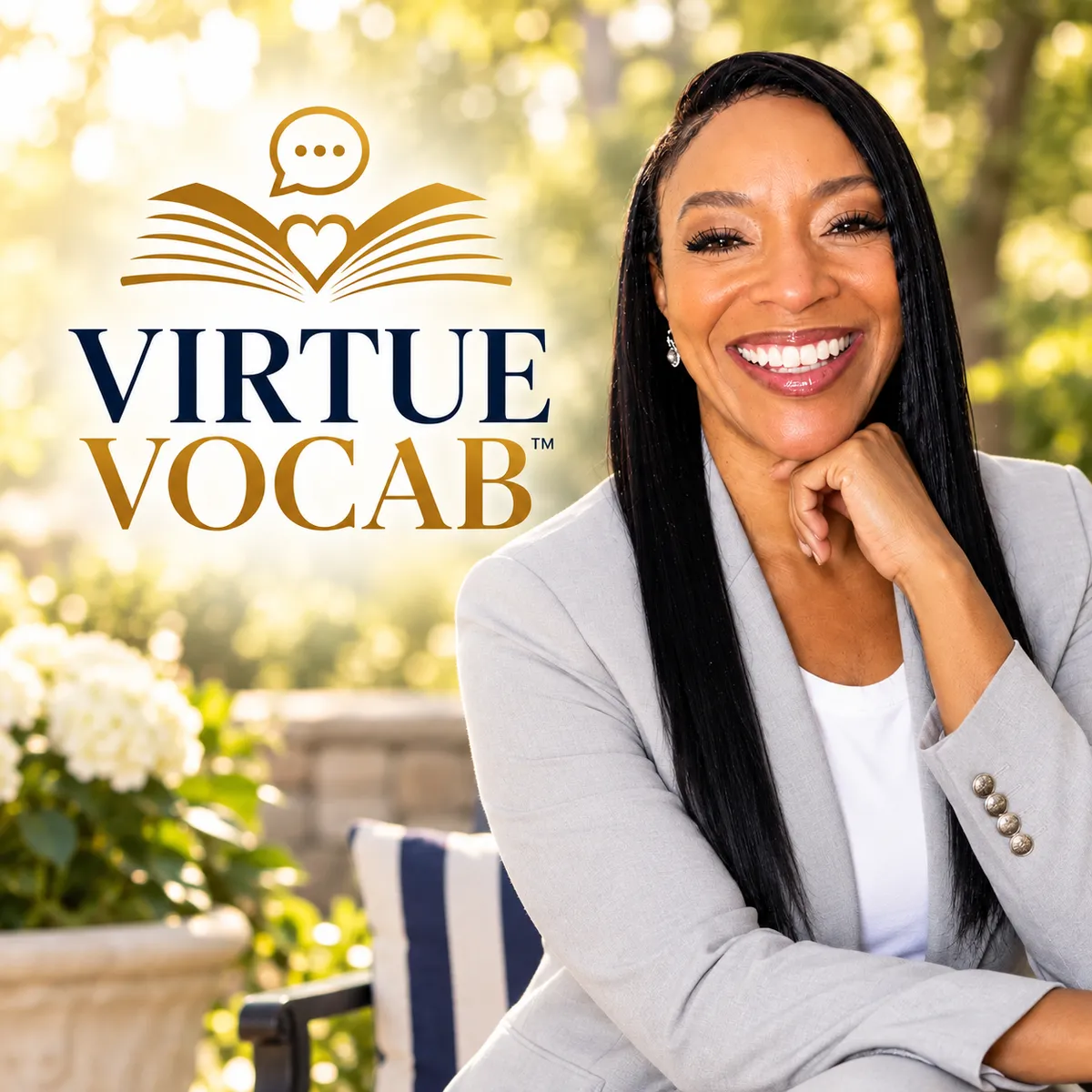
Created by Neiki Sheppherd
Curriculum Designer • Former Early Childhood Educator, Military Instructor & College Professor • Homeschool Mother
Virtue Vocab™ grew from a simple conviction: reading is part of the larger work of (1) learning language, (2) understanding meaning, (3) developing character, and (4) making wise decisions.
THE PHILOSOPHY
Make all learning lead to good character.
- Reading is part of a greater whole: language learning.
- Language learning begins with what we hear.
- Learning to read should also help us understand the words we hear, use, and see - and the ideas those words carry.
- All learning should promote healthy character and wise decision-making.
THE GAP BECAME CLEAR IN COLLEGE.
While teaching my first college psychology course, I saw students struggling with the reading and writing skills needed for a three-page paper. Designing a two-hour seminar for those students made one thing clear: foundational gaps do not always disappear with age. They can follow learners into adulthood.
Foundational gaps can follow learners for years.
Virtue Vocab™ is designed to help families and learners build deeper connections between language, reading, meaning, and character at our most affordable price.
Virtue Vocab™ is accessible excellence by
VIRTUE CAPITALISM™
CAPITALISM that makes learning wisdom affordable to everyday families.
Make truth, good character, and excellence affordable to every household.
We could have priced the Virtue Vocab™ system like a premium curriculum, but that goes against our core mission. We believe in Virtue Capitalism™ - delivering extraordinary educational value and keeping it accessible to the families who need it most.
You shouldn't have to sacrifice learning good character for affordability.
With this system, you receive robust phonics training and character-building framework used in elite academies, priced less than a family of four can dine at a restaurant.
VIRTUE VOCAB™
THE COMPLETE SYSTEM
$19.95/year
Learning honor for a life of virtue.
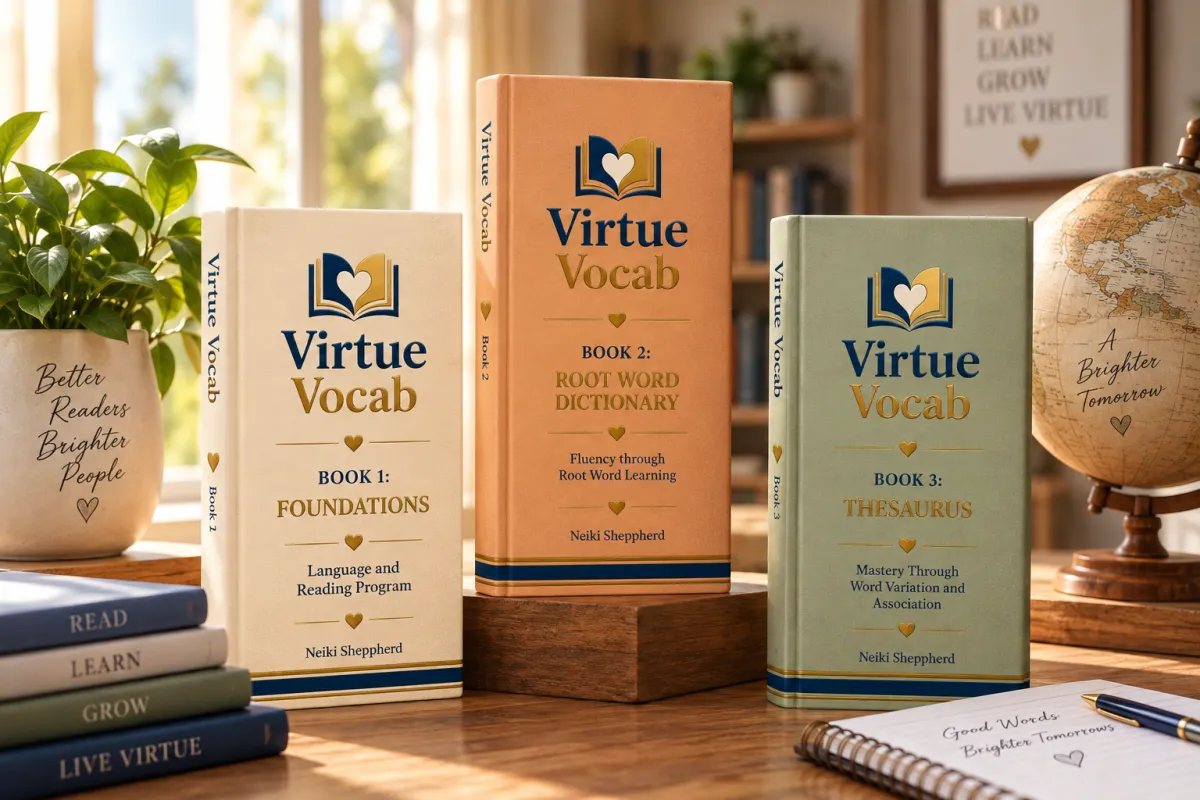
Three-Book Virtue Vocab™ Series
• Foundations of Language and Reading
• Root Word Dictionary
• Virtue Thesaurus
Teacher Manual and Student Book
3,000+ Virtues
140+ Phonetic Lessons
Complete phonics pathway
260+ vocabulary words
1,000 Sight Words
Integrated character lessons
Step-by-step adult learning guide
Essential grammar rules
Parts of a sentence
Replace profanity with virtues
Express emotions with virtue
Virtue Alphabet A-Z
1700+ Root Words
Greek, Latin, Hebrew origins
Virtuous Nouns & Virtuous Verbs
Synonyms & Antonyms